Mitra Investindo (MITI) Partners With CNEC INA to Develop Silica Mine
30 Sep 2026, 09:26 AM 515

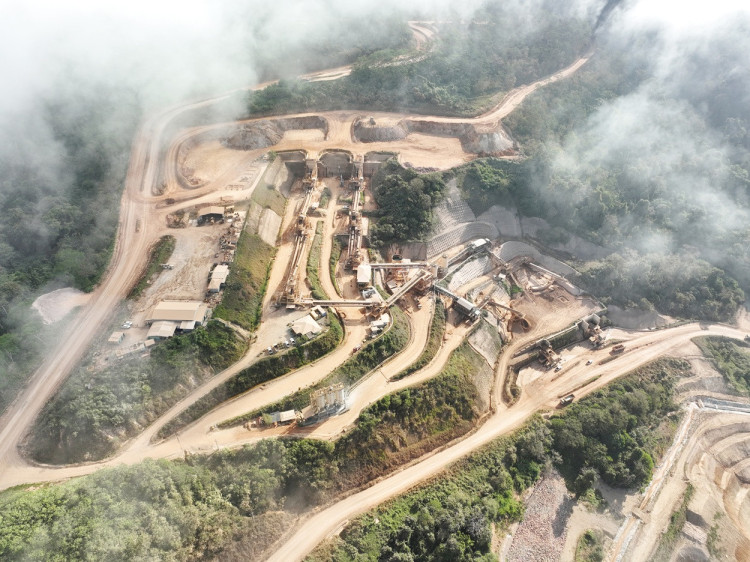
PT Mitra Investindo Tbk (MITI) has signed a memorandum of understanding (MoU) with PT CNEC Engineering Indonesia (CNEC INA) to develop a silica sand mining project. The cooperation covers three concessions owned by MITI subsidiaries, as well as other concessions to be owned by the company in the future.CNEC INA is an Indonesian subsidiary under China Nuclear Engineering & Construction Corporation, a Chinese state-owned enterprise. The collaboration between the two companies covers mineral resource development, technical services, and other strategic partnerships.“The main objective of this MOU is to establish a mutually beneficial framework for cooperation between the Company and CNEC INA for the successful implementation of all stages of the Silica Project development,” Mitra Investindo President Director Andreas Tjahjadi said in an information disclosure to the Indonesia Stock Exchange (IDX) on Wednesday (30/9/2026).The scope of development begins with the pre-project stage, including sampling, exploration, and feasibility studies. The cooperation also covers pre-project assessments, engineering and technical services, development studies, and strategic involvement after the project.Andreas hopes the cooperation framework can serve as an umbrella for the implementation of the silica project development, ensuring that each stage of the work is carried out on schedule and professionally.Nevertheless, MITI stressed that the signing of the MoU would not have a material impact on the company's operations, financial condition, or business continuity.“This MOU does not establish a legal partnership relationship, joint venture, or binding financial commitment between the Parties,” Andreas said.The cooperation adds to MITI's efforts to develop its silica business. Previously, on May 28, 2024, the company signed a strategic cooperation agreement with Interra Resources Ltd, a Singapore-based company listed on the Mainboard of the Singapore Exchange (SGX).At the time, MITI and Interra Resources announced plans to develop, manage, and operate silica concessions, including silica-based downstream industries such as solar panel manufacturing. The cooperation also included the establishment of a joint venture with foreign investment status.In the second trading session on Wednesday (30/9/2026), at 2:08 p.m. Jakarta time, MITI shares rose 7.35% from IDR 272 to IDR 292. Based on IDX trading data, the company's market capitalization reached Rp1.09 trillion, with a trading volume of 21.48 million shares, transaction value of IDR 6.31 billion, and 3,631 transactions.

Inalum Expands Low-Carbon Aluminum Reach in Global Markets
30 Sep 2026, 09:24 AM 759

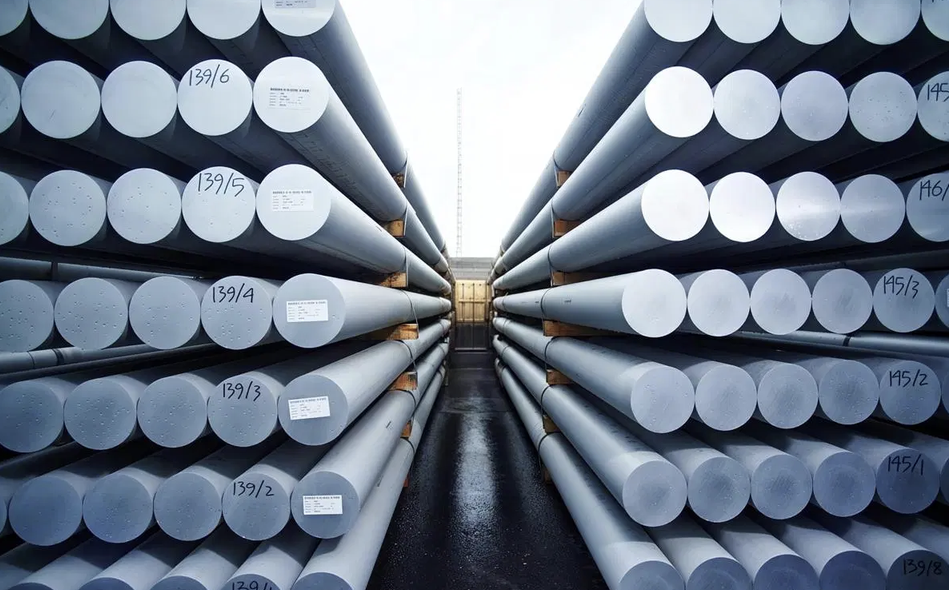
PT Indonesia Asahan Aluminium (Persero), or Inalum, is strengthening its position in the global aluminium market by launching Low Carbon Aluminium Certification (Green Aluminium). The strategy is aimed at expanding market access while increasing the added value of Indonesian aluminium products amid growing global industry demand for lower-emission supply chains.The certification was introduced at the Fastmarkets International Aluminium Conference 2026 on September 15 - 17, 2026, which brought together more than 500 industry players and decision-makers from across the global aluminium value chain.According to the company, the certification serves as an instrument to translate the use of hydropower-based energy in the smelting process into commercial value. The company has been using hydropower-based electricity in its primary aluminium production process.Inalum Director of Business Development and Commercial Arif Haendra said demand for aluminium with a lower carbon footprint is growing alongside changes in standards in global markets.“Global markets are paying greater attention to aluminium products with lower carbon footprints. As such, we have an advantage because our aluminium production process is supported by hydropower-based energy (renewable energy),” Arif said in a written statement (30/9).According to him, this advantage could provide stronger bargaining power, allowing Inalum's aluminium products to gain broader access to international markets.The strategy is also being strengthened through cooperation with several international partners, including Japan's Mitsubishi RtM, Hartree, and MIND ID Trading (MIT) Singapore-Concord UK.The collaboration is part of the company's efforts to open market access and expand the distribution network for Indonesian aluminium amid growing attention from global customers to sustainability and supply chain transparency.Head of Inalum's Commercial and Supply Chain Management Group Jevi Amri added that low-carbon certification is not solely related to the production process, but is also intended to address customer needs.“Low Carbon Aluminium is not only about a lower-emission production process, but also about how this advantage can address customer needs and create new market opportunities,” Jevi said.Through the certification, the company seeks to ensure that the characteristics of water-energy-based production can become part of its commercial proposition, rather than merely an operational aspect.The launch at the global aluminium industry forum also served as a platform for the company to introduce Indonesia's aluminium production capacity and product characteristics to international traders, customers and prospective strategic partners.

Merdeka Gold Resources Pours IDR 6.45 Trillion Into Pani Gold Mine
30 Sep 2026, 09:23 AM 533

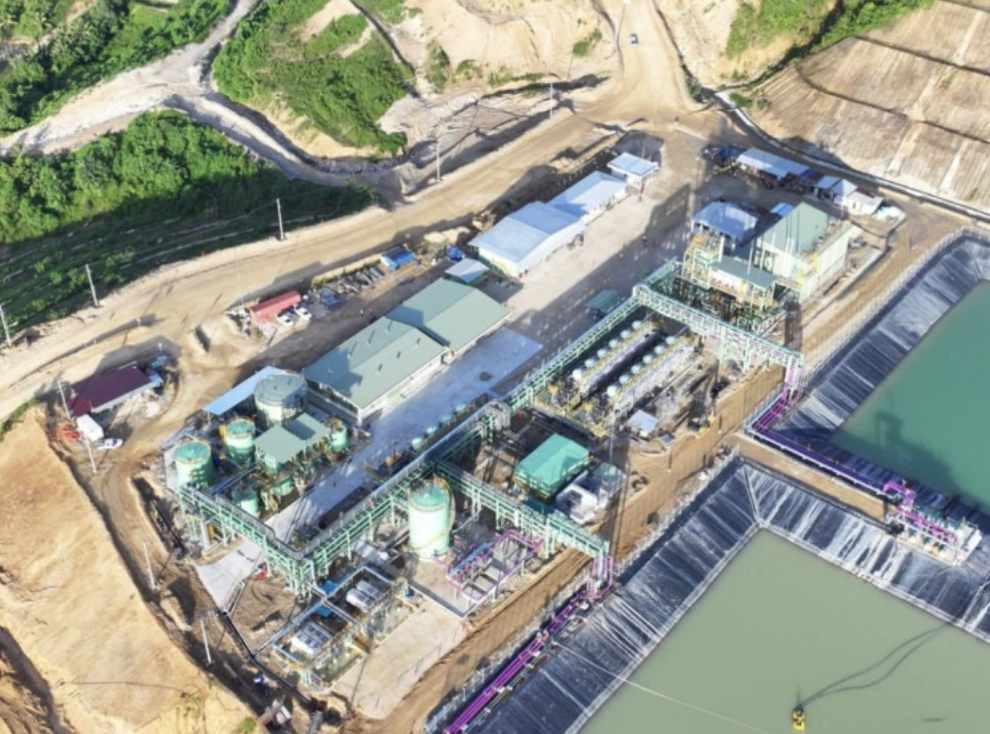
PT Merdeka Gold Resources Tbk (EMAS) and two of its subsidiaries have extended unsecured affiliate loan facilities with a combined ceiling of IDR 6.45 trillion to PT Pani Industri Nusantara (PIN).EMAS Corporate Secretary Adi Adriansyah Sjoekri said the credit facilities consist of IDR 3.05 trillion from the company, while PT Gorontalo Sejahtera Mining (GSM) and PT Puncak Emas Tani Sejahtera (PETS) each provided IDR 1.70 trillion.All of the credit facilities will carry an interest rate based on the INDONIA reference rate plus a 1.70% annual margin, with a maturity date of December 31, 2031."To increase PIN's funding flexibility in financing its needs, including but not limited to general corporate needs, working capital, capital expenditures and operating expenses," Adi explained in a statement submitted to the Indonesia Stock Exchange (IDX) on Tuesday (29/9).Although the facilities are unsecured, EMAS management said the sizable financing would not negatively affect the company's liquidity."On the contrary, the transactions are expected to strengthen PIN's funding capacity in supporting its operational activities and business development," Adi added.The total value of the loan facilities exceeds 20% of EMAS's equity as of June 30, 2026, placing the transactions in the category of material transactions regulated by the Financial Services Authority (OJK). However, management said the transactions do not require shareholder approval because the value of each transaction is below 50% of total equity and the transactions are conducted between entities within the same group.According to data from IDNFinancials.com, PIN is an EMAS-owned entity engaged in the precious metals industry. The company has total assets of USD 83.05 million, or around IDR 1.48 trillion.PIN is also an EMAS entity managing the Pani gold mining project in Pohuwato Regency, Gorontalo Province. PIN has previously developed a Heap Leach facility, Carbon-in-Leach (CIL) ore processing facilities, and waste management infrastructure.The amount is equivalent to 8.61% of EMAS's total consolidated assets, which stood at USD 964 million at the end of the first half of 2026. Meanwhile, EMAS's consolidated cash and cash equivalents stood at USD 62.14 million.EMAS is currently majority-owned by PT Merdeka Copper Gold Tbk (MDKA), an entity controlled by Edwin Soeryadjaya and Winato Kartono.

95% of 2026 Coal RKAB Approved, Production Seen at Around 720 Million Tons
29 Sep 2026, 09:21 AM 1220

The Ministry of Energy and Mineral Resources (ESDM) said that nearly all coal companies have received approval for revisions to their 2026 Work Plan and Budget (RKAB).Director General of Minerals and Coal (Minerba) at the Ministry of Energy and Mineral Resources, Tri Winarno, said that his office had approved 95% of mining companies' Work Plans and Budgets (RKAB)."95% of the RKABs have been issued, it's done," Tri said when met at the Kalibata Heroes Cemetery in Jakarta on Tuesday (29/9/2026).Asked about the estimated overall coal production forecast for 2026, Tri did not provide details. He said the figure was around 720 million tons."Yes, somewhere in between [720 million tons]," Tri said.Previously, the Ministry of Energy and Mineral Resources (ESDM), through the Directorate General of Minerals and Coal (Minerba), tightened requirements for licensing completeness and obligations for every business entity before mining activities can be carried out. The move was aimed at strengthening the mineral and coal sector.The Ministry of Energy and Mineral Resources ensured that all licensing and mining activity oversight processes are carried out through standardized, measurable and digitized systems. Director General of Minerals and Coal at the Ministry of Energy and Mineral Resources, Tri Winarno, stressed that mining activities cannot be conducted merely by holding a Mining Business License (IUP).He explained that companies are also required to prepare clear activity plans and meet technical, environmental and safety requirements, as well as state revenue obligations, before receiving approval to commence operations."Every mining activity must have a legal basis, clear planning, and comply with all applicable provisions. Therefore, the government conducts a comprehensive evaluation of various requirements that form part of mining governance," Tri said in a statement, as quoted on Saturday (13/6/2026).In accordance with Article 111 of Law No. 3 of 2020 on Mineral and Coal Mining, the RKAB is a mandatory document for holders of Mining Business Licenses (IUP) and Special Mining Business Licenses (IUPK), containing plans for mining business activities, covering business, technical, financial and environmental aspects.The RKAB document serves as a reference for companies in carrying out mining activities at the exploration, production operations, processing and/or refining, and post-mining stages. Therefore, every RKAB submission must undergo an evaluation process before receiving government approval. The entire submission, evaluation and approval process is conducted online and integrated through the MinerbaOne information system.As part of the evaluation process, the Directorate General of Minerals and Coal examines various aspects, including the completeness of administrative documents and licensing legality, the conformity of mining plans with Good Mining Practice principles, compliance with environmental obligations including reclamation guarantees, mining safety aspects, and the company's ability to fulfill state revenue obligations."We continue to make corrections and evaluate submitted documents to ensure that mining activities proceed according to plan and comply with good mining governance principles. Each approval is granted only after all required aspects have been deemed compliant," Tri explained.The regulation of RKABs was strengthened through Government Regulation No. 39 of 2025 and Minister of Energy and Mineral Resources Regulation No. 17 of 2025. All RKAB submissions are also made electronically through the integrated e-RKAB information system as part of the digital transformation of mineral and coal governance.Under this policy, the RKAB matrix has been simplified into three matrices for the exploration stage and ten matrices for the production operations stage. The simplification was carried out without reducing oversight of mining safety, compliance with non-tax state revenue (PNBP) obligations, the use of mining services, community development and empowerment (PPM), and reclamation obligations."Other matrices that are no longer used have been moved into the realization reporting matrix, which must be submitted periodically," Tri added.For business entities whose RKAB documents still require improvements, the government provides an opportunity to make revisions in accordance with the applicable mechanism."If there are still things that need to be improved, we provide room for them to be completed. We also continue to provide assistance through coaching clinics so that companies understand the aspects that need to be adjusted and their documents can meet the requirements," Tri said.Hundreds of assistance sessions have been conducted. Based on the evaluations, several aspects that still require improvement include exploration and reserve resource data, mining and overburden stockpiling plans, processing and refining aspects, marketing plans, and the completeness of the company's legal documentation.

Antam Absorbs 9 Tons of Freeport Gold, Gold Sales Reach IDR 50.39 Trillion
26 Sep 2026, 11:25 AM 899

PT Aneka Tambang Tbk (Antam) purchased nine tons of gold from PT Freeport Indonesia between January and August 2026. The purchase is part of Antam’s efforts to strengthen domestic gold supply amid the gold business’s significant contribution to the company’s revenue.Antam President Director Untung Budiharto said the purchase of gold from Freeport was part of the company’s efforts to reduce its reliance on overseas supplies while increasing the utilization of domestically mined resources.“The realization of the purchase of nine tons of gold from PTFI between January and August 2026 demonstrates ANTAM’s commitment to continuing to increase the utilization of domestically sourced gold,” Untung said in a statement quoted by Antara on Saturday, September 26.The gold came from Freeport’s precious metals refinery (PMR) facility in Gresik, East Java. The refined product has a purity level of 99.99%.Antam and Freeport had previously entered into a gold sales and purchase agreement with a capacity of up to 30 tons per year. The agreement provides Antam with certainty of raw material supply while strengthening ties between the domestic gold mining and processing industries.Domestic supply is becoming increasingly important given the significant contribution of the gold business to Antam’s revenue.During the first half of 2026, Antam’s gold sales reached 18.08 tons, valued at IDR 50.39 trillion. The value grew 1% from IDR 49.68 trillion in the same period a year earlier.The gold business contributed around 80% of Antam’s total net sales, which reached IDR 62.71 trillion in the first half of 2026.Meanwhile, gold production from Antam’s own mines stood at 433 kilograms during the same period.To strengthen its supply, Antam is not relying solely on Freeport. The company has also established partnerships with several national gold producers, including PT Amman Mineral Nusa Tenggara, Merdeka Group, PT Citra Palu Minerals, and PT Agincourt Resources.Other partners include PT Sumbawa Jutaraya, PT J Resources Bolaang Mongondow, and PT Indo Muro Kencana.Through partnerships with various producers, Antam is seeking to build a more diversified and sustainable domestic gold supply. The move also supports the development of the national bullion or gold bar business ecosystem.“ANTAM continues to strengthen its integrated gold business, from raw material procurement, processing and refining, and manufacturing to marketing to the public,” Untung said.He said growing national demand for gold needs to be supported by a strong domestic supply. Therefore, Antam plans to continue increasing gold purchases from domestic producers so that Indonesia’s mined resources generate greater added value domestically.

MDKA Swings to USD 102 Million Profit in H1 2026, Driven by Nickel and Gold Businesses
26 Sep 2026, 11:22 AM 1504

The strengthening of the nickel business and higher gold production have driven a recovery in MDKA’s profitability. The company is relying on increased contributions from the Pani Gold Mine and nickel processing in the second half of this year.PT Merdeka Copper Gold Tbk (MDKA) posted net profit attributable to owners of the parent entity of USD 102 million in the first half of 2026, reversing a loss of USD 16 million in the same period last year. The improvement was supported by stronger performance in its nickel and gold businesses.In a performance disclosure issued on Saturday (Sept. 26, 2026), MDKA recorded consolidated revenue of USD 1.40 billion throughout January-June 2026, up 64% from USD 855 million in the first half of 2025. In line with this, the company’s EBITDA surged 191% to USD 512 million from USD 176 million.The nickel business through PT Merdeka Battery Materials Tbk (MBMA) was MDKA’s largest EBITDA contributor. Its performance was supported by higher nickel ore sales volumes and prices, as well as contributions from High-Grade Nickel Matte (HGNM), Nickel Pig Iron (NPI), and acid products.In the gold business, increased operational contributions also strengthened the company’s profitability. PT Merdeka Gold Resources Tbk (EMAS) is projected to increase its contribution in the second half of 2026 as Pani Gold Mine production ramps up.MDKA President Director Albert Saputro said the improved performance in the first half of 2026 reflected stronger profitability across the company’s operating portfolio.“Our focus remains on disciplined execution, operational efficiency, and advancing the Group’s key growth projects to strengthen long-term value creation,” Albert said.Gold and Nickel Production IncreaseMerdeka Group’s gold production increased 32% year-on-year to 66,814 ounces in the first half of 2026. The Tujuh Bukit Gold Mine contributed 49,402 ounces, while the Pani Gold Mine produced 17,412 ounces after commencing operations this year. Meanwhile, gold sales rose 3% to 61,561 ounces.In the nickel business, MBMA produced 15.2 million wet metric tons (wmt) of nickel ore, up 121% year-on-year. Sales volume grew 60% to 12.4 million wmt.The company attributed the growth to higher equipment utilization, transportation efficiency, and productivity at its main mining areas.Nickel processing performance also improved. NPI production and sales each grew 20%, supported by more stable smelter operations. Meanwhile, HGNM production more than doubled, while sales increased 72%.Relying on Pani and nickel processingIn addition to optimizing operations, MDKA is continuing the development of several projects. The Tujuh Bukit Copper Project has entered the feasibility study stage, while the Pani Gold Mine is continuing to ramp up production and develop its Carbon-in-Leach (CIL) project.In the battery materials segment, PT ESG New Energy Material is continuing to ramp up Mixed Hydroxide Precipitate (MHP) production. Meanwhile, PT Sulawesi Nickel Cobalt is advancing its High Pressure Acid Leach (HPAL) project, which is targeted to commence production in the second half of 2026.MDKA expects the Pani Gold Mine’s contribution to increase in the second half of this year, in line with higher mining rates, ore stacking volumes, and gold recovery rates in its heap leach operations.In the battery materials business, the company will increase nickel ore volumes, maintain its NPI and HGNM production targets, and drive higher HPAL operating levels.Despite the improvement in first-half performance, MDKA continues to monitor commodity price movements, fuel and energy costs, exchange rates, and regulatory changes that could affect performance through year-end. The company said it will focus on achieving production targets, maintaining cost discipline, and ensuring measured capital allocation to support operations and project development.

Danantara, MIND ID and CITIC Resources Explore Joint Development of Strategic Minerals
25 Sep 2026, 11:39 AM 915

Indonesia’s sovereign wealth manager Danantara is exploring cooperation with Chinese state-owned company CITIC Group, alongside mining holding company MIND ID and state-owned aluminum company PT Indonesia Asahan Aluminium (INALUM), to strengthen the development and management of the country’s strategic mineral resources.Danantara CEO Rosan Roeslani said the discussions with CITIC Group in Jakarta are centred on three areas: capital, resources and infrastructure.On resources, Danantara is discussing potential cooperation with CITIC Resources, MIND ID and INALUM to strengthen Indonesia’s strategic mineral sector.“Resources together with CITIC Resources, MIND ID, and INALUM strengthen collaboration in Indonesia’s strategic mineral sector,” Rosan said in a statement posted on his Instagram account on Friday, September 25, 2026.Capital and InfrastructureThe capital discussions involve Danantara and China Securities, with potential cooperation covering capital markets and financing.Meanwhile, infrastructure discussions with CITIC Construction and BOPPJ include potential development of major projects such as the Giant Sea Wall along Indonesia’s northern Java coast.Rosan said the three areas are intended to strengthen Indonesia’s capacity to support economic growth and improve national competitiveness.“Capital opens access. Resources create value. Infrastructure builds the future,” he said.

UNTR’s Coal Mining Quota Rises as Mineral Mining Business Continues to Expand
23 Sep 2026, 04:26 PM 1111

PT United Tractors Tbk (UNTR) received a revised coal Work Plan and Budget (RKAB) allocation of 12.4 million tons in August 2026, up from the previous allocation of around 7.4 million tons.United Tractors Finance Director Vilihati Surya explained that the additional RKAB allocation presents an opportunity for UNTR to increase coal production and sales in the second half of 2026, despite operational challenges.“The good news is that in August 2026, we received an increase in the RKAB to 12.4 million tons. However, there are indeed more challenges ahead, which is why we have to pray a lot,” he said on Wednesday (Sept. 23).Even so, Vilihati said UNTR’s next challenge would come from weather conditions in Central Kalimantan, which is entering the dry season. The conditions could affect UNTR’s coal production activities in the second half.With the additional RKAB allocation, UNTR will optimize coal production and sales. However, some of the production could potentially be stored as inventory before being sold in November to December 2026.“So we will produce [the coal] and then possibly sell it in November to December 2026, and we will maximize [sales], while some of it will first be kept in inventory,” Vilihati said.Amid the revised coal RKAB allocation, UNTR is also continuing to strengthen its mining business diversification into mineral commodities. PAMA Group has begun expanding its mining contracting activities into the gold and nickel sectors.“Right now, we divide it into two [segments]. The first is mining solutions and equipment. The second is other businesses,” Vilihati said.According to Vilihati, UNTR is not only relying on thermal coal but is also expanding its exposure to metallurgical coal. He said the demand characteristics for the two types of coal are different.“For metallurgical [coal], there is still no substitute to date. Thermal coal already has substitutes, which are now coming from renewable energy,” Vilihati said.During the January-August 2026 period, UNTR’s thermal and metallurgical coal sales through PT Tuah Turangga Agung reached 8.37 million tons. This realization fell 19.44% year-on-year (YoY) from 10.39 million tons in August 2025.UNTR’s non-coal mineral business operations also declined. As of August 2026, gold sales from Agincourt Resources and Sumbawa Jutaraya fell 73.91% YoY to 42,000 ounces.Meanwhile, nickel ore sales through Stargate reached 1.05 million wet metric tons as of August 2026, comprising 711,000 tons of limonite and 348,000 tons of saprolite. During the same period in 2025, UNTR’s nickel ore sales reached 1.43 million wet metric tons.JP Morgan Sekuritas Equity Research analyst Arnanto Januari assessed that the risk-return profile of UNTR shares was becoming increasingly positive as industry conditions appeared supportive of potential coal price increases in the short term.

Timah Poised to Lead BMKS, Says It Is the Most Governance Ready
23 Sep 2026, 11:30 AM 839

Harwendro Adityo Dewant, chairman of the Indonesian Tin Exporters Association (AETI), said the national tin industry is currently considered the most prepared to pioneer exports through the Mineral and Strategic Commodities Exchange (BMKS) starting January 1, 2027.According to Harwendro, tin governance is currently the most well-organized compared with other mineral commodities.This is evidenced by the comprehensive regulations governing mining permit (IUP) holders and refining facilities (smelters), as well as the entire sales scheme, which has been conducted 100% through the exchange since 2014 under the supervision of the Commodity Futures Trading Supervisory Agency (Bappebti) at the Ministry of Trade.“In fact, we are the ones pushing for this so that we can be the first to export, because the tin industry itself is actually fully prepared. Starting from the IUP, smelter owners, and our sales, everything has already gone through the exchange 100%,” Harwendro said when contacted on Wednesday (Sept. 23, 2026).Unlike coal, which uses long-term contracts, Harwendro said tin transactions rely entirely on the exchange mechanism.As such, integrating transactions under government management would instead complement the infrastructure of the domestic tin market.“For us, transactions have always gone through the exchange. So we don’t have long-term contracts like coal or other minerals,” he explained.Buffer StockThrough the BMKS, he added, AETI believes the government will not only control the transaction exchange but also have a buffer stock of tin commodities.Harwendro added that the availability of this buffer stock is an absolute requirement for Indonesia to play a role as a global tin price maker, given Indonesia’s position as the world’s largest tin exporter.“Then we also need to talk about the physical tin itself, which is called the buffer stock. Once all of that is in place, we will have become a price maker, meaning we can become a global price maker,” he said.Previously, BMKS Supervisory Executive Head and concurrently a member of the Board of Commissioners of the Financial Services Authority (OJK), Sarjito, said preparations for establishing the BMKS—which is planned to be named the Indonesia Commodity Exchange (Icomex)—had entered several key stages.“By Jan. 4, 2027, we expect trading on the mineral and strategic commodities exchange to commence through the Icomex entity,” Sarjito said during a working meeting with Commission XI in Jakarta on Tuesday (September 15, 2026).Sarjito said his institution would carry out preparations for the launch of Icomex throughout September-November this year. He expressed hope that Icomex could begin operating in early 2027.He said the commodities included in exchange trading would be introduced gradually, depending on market participation. At the initial stage, tin and ferronickel will be the first commodities traded through Icomex.Meanwhile, state-owned mining companies that are members of the MIND ID Group will become initial participants in mineral commodity trading through Icomex.“Tin is currently traded on ICDX and has been for quite some time, but participation at the time was still limited,” he said.Meanwhile, OJK issued two OJK Regulations (POJK) concerning the Mineral and Strategic Commodities Exchange (BMKS) on Friday (Sept. 18, 2026).They are POJK No. 15/2026 on the Phased Transfer of Duties and Authorities for the Regulation and Supervision of Transactions on the BMKS from the Commodity Futures Trading Supervisory Agency (Bappebti) to OJK, and POJK No. 16/2026 on the Operation of the Mineral and Strategic Commodities Exchange.POJK No. 15/2026 took effect on Sept. 17, 2026, while POJK No. 16/2026 will take effect on Jan. 1, 2027.“POJK No. 15/2026 on the BMKS transfer from Bappebti to OJK regulates the mechanism for transitioning the BMKS regulatory and supervisory authorities from Bappebti to OJK so that the process runs smoothly and in a measured manner, in order to maintain market stability, prevent legal gaps, and minimize operational obstacles for existing business operators,” said OJK Public Communications Directorate Head Sekar Putih Djarot in a press statement.The transfer of authority from Bappebti to OJK will take effect on Jan. 1, 2027, when the BMKS begins operations.Meanwhile, through POJK 16/2026, OJK is strengthening the regulatory and supervisory framework for BMKS operations, covering, among other things, participants in BMKS trading activities, trading and trading phase procedures, BMKS transaction operations, governance, risk management, user protection, and integrity enforcement.
Advertisement


Get Your Pass